
Agentic AI is a type of artificial intelligence that can understand goals, make decisions, plan tasks, use tools, and take actions with limited human intervention. Unlike traditional AI systems that mainly respond to prompts, agentic AI can work through multiple steps to achieve a specific objective.
Agentic AI combines technologies such as large language models, reasoning, planning, memory, data retrieval, APIs, and tool use. This allows AI systems to move beyond simply generating answers and become capable of completing practical tasks.
For example, a traditional AI chatbot may explain how to solve a customer problem. An agentic AI system could understand the customer’s request, find relevant information, check available data, determine the appropriate solution, update a record, and escalate the issue if human assistance is required.
What Is Agentic AI?
Agentic AI is an AI system designed to pursue goals by reasoning, planning, using tools, and taking actions with a degree of autonomy.
The term “agentic” relates to the ability to act toward a goal. Instead of requiring a person to provide instructions for every individual step, an agentic AI system can determine what needs to happen next based on the objective and available information.
A simple agentic AI process looks like this:
Goal → Understand → Plan → Act → Evaluate → Adjust → Complete
For example, if a business wants to analyze potential customers, an agentic AI system could identify the target audience, collect approved information, evaluate prospects, organize the results, and prepare a report.
This makes agentic AI different from AI tools that only provide information or generate content.
How Does Agentic AI Work?
Agentic AI generally works through several connected stages. The exact process depends on the system, but the main steps are similar.
1. Understand the Goal
The process starts with a goal or instruction.
For example:
“Analyze these leads and identify the most promising prospects.”
The AI needs to understand the expected result before deciding what actions are necessary.
2. Reason About the Task
The AI analyzes the request and determines what information, decisions, and actions are required.
It may identify missing information and decide which tools are needed.
3. Create a Plan
A complex objective can be divided into smaller tasks.
For example:
Collect information → Filter data → Analyze prospects → Rank results → Create report
The plan can change when the agent receives new information.
4. Use Tools
One of the most important features of agentic AI is tool use.
An AI agent may interact with:
- APIs
- Databases
- Search systems
- Business applications
- CRM platforms
- Files
- Knowledge bases
- Code execution tools
- Workflow systems
Tools allow the AI to move from generating information to performing actions.
5. Take Action
After creating a plan, the agent performs the required tasks.
Depending on its permissions, it may retrieve information, update a record, create a document, analyze data, or trigger another workflow.
6. Evaluate the Result
The system checks whether the action produced the expected result.
If something is wrong or incomplete, the agent can adjust its approach and continue working.
This creates a continuous cycle:
Reason → Act → Observe → Evaluate → Adjust
7. Complete or Escalate the Task
Once the objective is achieved, the agent can provide the result.
For sensitive or complicated tasks, it can instead request human approval or escalate the task to a person.
What Are the Main Components of Agentic AI?
An agentic AI system usually contains several important components.
| Component | Purpose |
| AI model | Provides reasoning and language capabilities |
| Instructions | Define the goal and expected behavior |
| Memory | Maintains relevant information and context |
| Tools | Allow interaction with external systems |
| Planning | Breaks complex objectives into smaller tasks |
| Retrieval | Provides relevant information |
| Orchestration | Coordinates different tasks and tools |
| Guardrails | Restrict unsafe or unauthorized actions |
| Evaluation | Measures task performance |
| Human oversight | Controls important decisions |
Not every agentic AI system needs all of these components. The architecture depends on the task, available data, required tools, and level of autonomy.
Agentic AI vs Generative AI: What Is the Difference?
Generative AI creates content, while agentic AI focuses on achieving goals through reasoning and actions.
Generative AI can create text, images, audio, video, code, summaries, and other outputs.
Agentic AI can use generative AI as one part of a larger system that also plans tasks, interacts with tools, evaluates results, and takes actions.
| Generative AI | Agentic AI |
| Generates content | Pursues goals |
| Responds to prompts | Can perform multi-step tasks |
| Mainly produces outputs | Produces outputs and takes actions |
| Often reactive | More goal-oriented |
| May use limited tools | Can coordinate multiple tools |
| Human provides instructions | Agent can determine next steps |
The two technologies are not competitors. In many modern AI systems, generative AI provides the language and reasoning capabilities that power agentic workflows.
Agentic AI vs AI Agents
AI agents and agentic AI are closely connected terms.
An AI agent is a software system designed to perform tasks toward a specific goal.
Agentic AI is the broader concept of creating AI systems that demonstrate capabilities such as autonomy, planning, reasoning, adaptation, and action.
For example, a customer service AI agent may handle support requests, while an agentic AI system could coordinate several agents to manage a larger customer service workflow.
What Are the Types of Agentic AI?
Single-Agent Systems
A single AI agent handles a task from beginning to end.
For example, a research agent could receive a question, gather information, analyze the findings, and prepare a report.
Single-agent systems are generally easier to design and manage than complex multi-agent systems.
Multi-Agent Systems
A multi-agent system uses several specialized AI agents.
For example:
Research Agent → Analysis Agent → Writing Agent → Review Agent
Each agent has a specific responsibility.
This approach can be useful when a task requires different types of expertise or multiple specialized processes.
Agentic Workflows
Agentic workflows combine predefined processes with AI-driven decisions.
For example:
Customer Request → Classification → Information Retrieval → Decision → Action → Human Approval
This approach gives businesses more control while still allowing AI to handle flexible decisions within the workflow.
What Are the Benefits of Agentic AI?
Agentic AI can provide several benefits when used for appropriate tasks.
- Automates Complex Tasks: Agentic AI can handle workflows containing multiple connected steps instead of requiring a person to manage every individual action.
- Reduces Repetitive Work: Agents can perform repetitive digital activities such as information retrieval, classification, documentation, and data processing.
- Improves Productivity: Employees can spend less time on repetitive workflows and more time on activities requiring creativity, strategy, and human judgment.
- Works With Multiple Tools: An agent can potentially connect different systems and applications within one workflow.
- Supports Faster Decisions: Agentic AI can collect information, compare options, and prepare recommendations quickly.
- Handles Changing Conditions: Unlike fixed automation, an agent can adjust its approach when the situation changes.
What Are the Use Cases of Agentic AI?
Agentic AI has applications across many industries.
Customer Service
AI agents can understand customer requests, retrieve information, provide answers, update records, and escalate complex issues.
Software Development
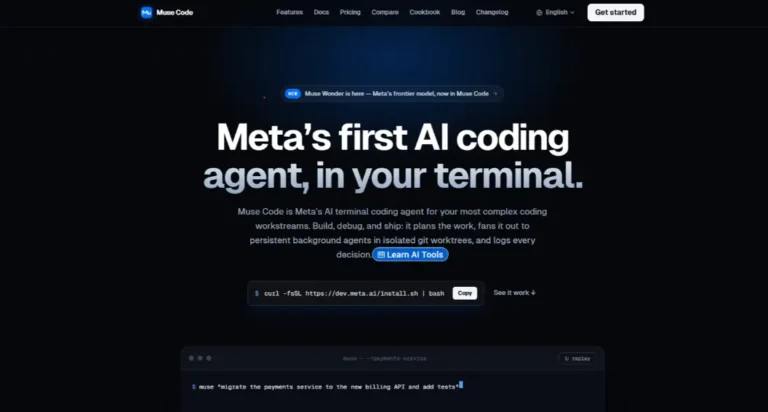
Coding agents can help developers understand code, identify problems, write code, run tests, analyze errors, and suggest improvements.
Marketing
Marketing agents can assist with market research, competitor analysis, content planning, keyword research, reporting, and campaign analysis.
Sales
Sales agents can help with lead research, qualification, CRM updates, customer research, meeting preparation, and follow-up tasks.
Finance
Agentic AI can support financial analysis, document processing, reconciliation, reporting, and other structured workflows.
IT Operations
AI agents can analyze alerts, investigate technical problems, retrieve documentation, and support incident-response processes.
Healthcare Administration
Agentic AI can assist with administrative activities such as scheduling, documentation, information retrieval, and workflow coordination.
What Are the Risks of Agentic AI?
Greater autonomy also creates additional risks.
Incorrect Decisions
An agent can misunderstand an instruction or make an incorrect decision. If it has permission to perform actions, the consequences can be greater than a simple incorrect answer.
AI Hallucinations
AI systems can generate inaccurate information. When incorrect information is passed into a multi-step workflow, the error can affect later actions.
Security Risks
Agents that can access websites, files, databases, or business applications may be exposed to malicious instructions or unauthorized actions.
Privacy Concerns
AI agents may process sensitive business or personal information. Strong access controls and data protection practices are important.
Higher Costs
Complex agents may require multiple AI model calls, tool calls, and data retrieval operations, which can increase operational costs.
Lack of Predictability
An agent may take different paths to achieve the same goal. This flexibility can be useful but can also make testing more difficult.
How Can Businesses Use Agentic AI Safely?
Businesses should start with a clearly defined problem instead of giving an AI agent unlimited access.
Step 1: Choose a Specific Workflow
Start with a repetitive process that has clear objectives and measurable results.
Step 2: Define the Goal
Explain exactly what the AI agent should accomplish.
Step 3: Limit Permissions
Give the agent access only to the tools and information it needs.
Step 4: Add Guardrails
Define which actions the agent can and cannot perform.
Step 5: Include Human Approval
Require human confirmation for important or high-risk actions.
Step 6: Test the System
Test normal situations as well as unexpected inputs and failure scenarios.
Step 7: Monitor Performance
Track successful tasks, failures, costs, tool usage, and unusual behavior.
Step 8: Improve the Workflow
Use performance data to improve instructions, tools, permissions, and evaluation processes.
Is Agentic AI the Future of AI?
Agentic AI is an important direction in artificial intelligence because it allows AI systems to move from generating answers toward completing goals.
However, agentic AI will not necessarily replace every other type of AI.
A simple chatbot may be better for answering questions. Generative AI may be better for creating content. Traditional automation may be better for predictable processes.
Agentic AI is most useful when a task requires reasoning, multiple steps, external tools, adaptation, and goal-oriented action.
The future of AI will likely combine traditional automation, generative AI, AI agents, and agentic workflows depending on the needs of each task.
What Is an Example of Agentic AI?
Imagine an online store receives hundreds of customer requests every day.
A traditional chatbot may answer frequently asked questions.
An agentic AI system could:
- Read the customer’s request.
- Identify the customer’s problem.
- Retrieve account information.
- Check relevant company policies.
- Determine the appropriate solution.
- Update the customer record.
- Prepare a personalized response.
- Escalate unusual cases to a human employee.
The key difference is that the system is not simply generating text. It is working through a sequence of actions to achieve a specific objective.
Conclusion
Agentic AI is changing how artificial intelligence can be used to complete complex tasks. Instead of only answering questions or generating content, agentic AI can understand goals, create plans, use tools, take actions, evaluate results, and adjust its approach.
Its applications range from customer service and software development to marketing, sales, finance, and IT operations. However, greater autonomy also requires stronger security, permissions, testing, monitoring, and human oversight.
The best use of agentic AI is not simply to automate everything. Businesses should identify tasks where AI reasoning and flexible decision-making can provide measurable value. For simple and predictable processes, traditional automation may remain the better option.
As AI continues to become more capable, agentic AI is likely to become an important part of modern AI automation and digital workflows.
Frequently Asked Questions
What is agentic AI?
Agentic AI can understand goals, plan tasks, use tools, and take actions with limited human help.
How does agentic AI work?
It understands a goal, creates a plan, takes actions, and evaluates the results.
What is the difference between agentic AI and generative AI?
Generative AI creates content, while agentic AI can plan and perform multi-step tasks.
What are the benefits of agentic AI?
It can automate tasks, improve productivity, reduce repetitive work, and support faster decisions.