Visit Tool
ByteDance is a global technology company best known as the original parent company of TikTok, but its business is much larger than one social media app. Founded in Beijing in 2012, ByteDance develops content platforms, creative software, AI models, enterprise services, and e-commerce tools. Its portfolio includes TikTok, China’s Douyin, CapCut, Lemon8, Dreamina, Dola, Lark, and the ByteDance Seed AI research team. The company says its apps are available in more than 150 markets and reach over 2 billion users worldwide.
Understanding ByteDance means looking at how it connects recommendation technology, digital entertainment, creator tools, and artificial intelligence—and how regulatory scrutiny has shaped its global operations.
What Is ByteDance?
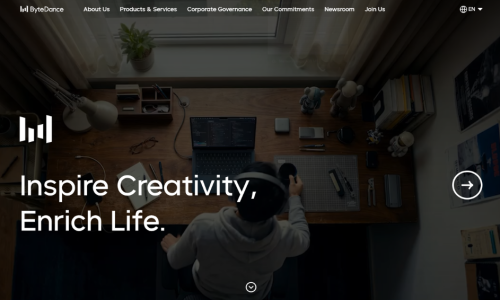
ByteDance is a privately held internet and technology company that builds digital products for consumers, creators, and businesses. Its stated mission is to “Inspire Creativity, Enrich Life.” The company groups its activities across AI and discovery businesses, information and content platforms, and transactional services.
ByteDance became internationally recognized through TikTok, a short-form video platform where users discover content through a personalized recommendation feed. However, TikTok is only one part of its ecosystem. The company also operates products for video editing, productivity, reading, education, e-commerce, and AI-powered content creation.
This broad portfolio is important: ByteDance is a technology group that applies data, software, and machine learning across several consumer and enterprise markets.
Who Founded ByteDance and Who Runs It?
ByteDance was founded in March 2012 by Zhang Yiming and Liang Rubo in Beijing, China. Zhang Yiming is the company’s founder and served as its CEO from 2012 to 2021. Liang Rubo, a co-founder who previously led product development and internal systems, became CEO in late 2021.
As of November 2026, ByteDance’s official corporate governance page identifies Rubo Liang as its chairman and CEO. Shou Chew is listed separately as CEO of TikTok, not CEO of ByteDance.
ByteDance operates internationally, with offices and localized teams across six continents. It is privately held, so its shares are not traded on a public stock exchange.
The Main Products and Services Owned by ByteDance
ByteDance’s product portfolio serves different audiences and markets. Some services are global, while others are designed mainly for users in mainland China.
| Product | Main purpose | Typical audience |
| TikTok | Short-form video and discovery | Global creators and viewers |
| Douyin | Short video, live content, and commerce | China-based users |
| CapCut | Video editing and creator tools | Creators and marketers |
| Lemon8 | Lifestyle content and discovery | Lifestyle communities |
| Dreamina | AI image and video creation | Visual creators |
| Dola | AI assistant for writing and productivity | Consumers |
| Doubao | AI assistant | China-based users |
| Lark / Feishu | Workplace collaboration | Teams and businesses |
| BytePlus / Volcano Engine | Enterprise technology and AI services | Developers and companies |
| PICO | Virtual reality hardware and platform | XR users and developers |
TikTok and Douyin
TikTok and Douyin are related but separate short-video platforms built for different markets. TikTok serves international audiences, while Douyin is ByteDance’s China-market platform. Both combine short videos, creator tools, personalized discovery, and commerce features.
CapCut and Lemon8
CapCut provides video editing features such as templates, effects, filters, text, and other tools for social content production.
Lemon8 focuses on lifestyle discovery, with content around areas such as fashion, beauty, travel, and everyday interests. It gives ByteDance another way to connect creators, audiences, and visual recommendations.
Business and Productivity Products
Lark, known as Feishu in China, combines messaging, documents, calendars, email, and video meetings in one workplace platform. BytePlus and Volcano Engine provide technology services for businesses, including AI models and related infrastructure.
How ByteDance Uses Artificial Intelligence
AI is central to ByteDance’s product strategy. Recommendation systems help users discover content, while generative AI supports image creation, video production, language tasks, speech, and productivity.
The company’s AI research group, ByteDance Seed, develops foundation models and multimodal systems. Its current model portfolio includes Seed 2.1 for agentic and productivity-oriented tasks, Seedance for video generation, Seedream for image generation, and Seed Audio for speech and audio applications.
Seedance: AI Video Generation
Seedance is ByteDance’s family of video-generation models. Seedance 2.5, introduced in 2026, is designed for video and audio creation with flexible reference inputs. It can use combinations of text, images, video, and audio to guide generated scenes.
This makes it relevant to creators who want more control over movement, visual continuity, and sound.
Seedream: AI Image Creation
Seedream focuses on image generation and editing. ByteDance Seed announced Seedream 5.5 on November 9, 2026, describing it as a multimodal image model designed for more creative results and precise execution. It is part of the company’s wider effort to make AI visual tools useful in creator workflows.
Dola and Doubao: AI Assistants
Dola is a general AI assistant available in multiple markets, with text, voice, and multimodal capabilities for tasks such as writing, translation, information retrieval, and image generation. Doubao is ByteDance’s AI assistant for the China market. Their availability and features can vary by region.
For businesses and developers, BytePlus and Volcano Engine offer access to AI models and supporting services. Availability, pricing, and model access depend on the product and market, so there is no single ByteDance AI subscription that covers every service.
How Does ByteDance Make Money?
ByteDance uses several business models rather than relying on one app or revenue stream.
- Advertising: Brands pay to reach audiences through advertising products such as TikTok for Business and China-focused marketing services.
- E-commerce and transactions: TikTok Shop and Douyin commerce connect product discovery with purchases, livestreams, and merchant services.
- Subscriptions and in-app purchases: Some services offer paid features, digital items, or premium experiences, depending on the market.
- Enterprise technology: BytePlus and Volcano Engine provide business services, including AI and cloud-related capabilities.
- Creator and content ecosystems: Editing, publishing, and discovery tools help sustain engagement across ByteDance’s platforms.
Pricing and availability vary by service and region; there is no single ByteDance subscription covering the entire portfolio.
ByteDance, TikTok, and the 2026 U.S. Ownership Change
ByteDance’s relationship with TikTok in the United States has been a major regulatory issue. U.S. lawmakers and officials raised concerns about data security, algorithm control, and the potential influence of the Chinese government. Those debates led to legislation requiring a change in TikTok’s U.S. ownership or a ban.
In January 2026, TikTok finalized the creation of TikTok USDS Joint Venture LLC. Reuters reported that American and international investors hold 80.1% of the venture, while ByteDance retains 19.9%. Oracle, Silver Lake, and Abu Dhabi-based MGX each hold 15%. The venture is responsible for safeguards around U.S. user data, applications, and the recommendation algorithm, which is to be retrained and operated in Oracle’s U.S. cloud.
The arrangement applies to TikTok’s U.S. operations, not all ByteDance products worldwide.
Privacy, Safety, and Regulatory Challenges
ByteDance’s global reach brings significant responsibilities. Social platforms collect and process user information, recommend content, and host material created by millions of people. Regulators have therefore focused on privacy, children’s safety, content moderation, and data governance.
For example, the U.S. Department of Justice announced a $400 million settlement with TikTok, ByteDance, and affiliated entities on August 21, 2026, resolving litigation over compliance with the Children’s Online Privacy Protection Act. The settlement is a reminder that growth and innovation must be matched by strong safeguards for younger users.
Users and businesses should review each product’s privacy settings and terms because data practices and age rules can differ by region.
Is ByteDance a Good Company to Watch in 2026?
ByteDance is worth watching because it operates at the intersection of social media, creator software, commerce, and generative AI. Its existing distribution platforms give it routes to reach creators and consumers, while its Seed models expand the company’s capabilities in image, video, audio, and language technologies.
Creators can explore CapCut, TikTok, Dreamina, and Seedance, while businesses may look at Lark, BytePlus, and Volcano Engine. For AI enthusiasts, Seedream, Seedance, and Dola show how ByteDance is competing in a fast-moving market.
There are also meaningful risks: regulation, privacy expectations, competition, platform dependence, and the need to prove that AI-generated content is safe and reliable.
Final Thoughts
ByteDance has grown from a Beijing startup into a global technology group spanning content, commerce, productivity, and AI. TikTok made it widely known, but CapCut, Douyin, Lark, BytePlus, Dreamina, and its Seed models reveal a much broader strategy.
Its opportunity is to connect large consumer platforms with increasingly capable AI tools. Its challenge is maintaining trust while navigating privacy rules, child-safety requirements, and geopolitical scrutiny.
For anyone following AI, ByteDance matters not only because of TikTok, but because it connects content discovery, creative software, and generative AI.
Want to explore more emerging AI companies and technologies? Visit RentaAI for practical AI guides, software comparisons, and the latest developments in artificial intelligence.
Frequently Asked Questions About ByteDance
Is ByteDance the owner of TikTok?
ByteDance created TikTok and remains its parent company globally. However, TikTok’s U.S. operations moved into a majority American-owned joint venture in January 2026, in which ByteDance retains a 19.9% stake.
Is ByteDance a Chinese company?
ByteDance was founded in Beijing by Chinese entrepreneurs and has major operations in China, alongside offices and teams around the world. Its products operate in many international markets.
Who is the CEO of ByteDance in 2026?
Rubo Liang is ByteDance’s chairman and CEO. Shou Zi Chew is the CEO of TikTok.
What AI tools does ByteDance make?
Its AI-related products include Seedance for video generation, Seedream for image generation, Dola and Doubao assistants, and enterprise AI services through BytePlus and Volcano Engine.
Is ByteDance publicly traded?
No. ByteDance is a privately held company, so its shares are not listed on a public stock exchange.
What is the difference between TikTok and Douyin?
TikTok is ByteDance’s international short-video platform, while Douyin is its China-market counterpart. They are separate services with different market focus and product environments.