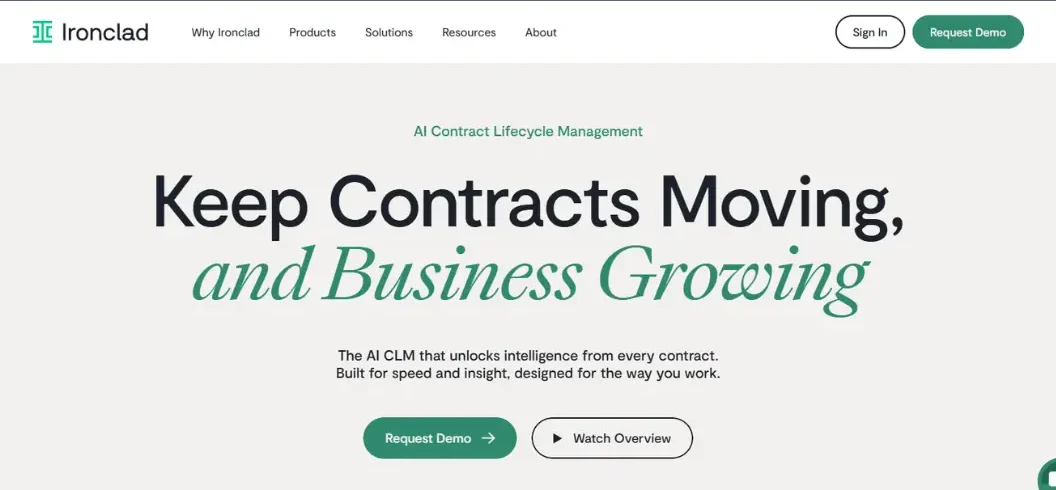

OpenAI and Ironclad are working to improve GPT-6 Astra’s ability to handle complex legal and business tasks. Founded in San Francisco in 2014, Ironclad provides contract management software for legal, sales, procurement, and IT teams.
Through the Model Context Protocol (MCP), Ironclad connects its contract data and workflows with ChatGPT, helping users access information and manage tasks more efficiently. Jason Boehmig, Ironclad’s former CEO and current executive chairman, joined OpenAI in June 2026 to lead its legal program, supporting collaboration between AI developers and specialized software providers.
How the OpenAI–Ironclad Partnership Works
The two platforms serve different but complementary purposes. Ironclad maintains contract records, provides agreement-related intelligence, and supports business actions. ChatGPT offers a conversational interface through which employees can access information and request assistance.
This integration can help teams locate agreements, review transaction progress, check approval stages, and retrieve relevant details without repeatedly moving between applications. The aim is to reduce friction in everyday work while keeping established business procedures in place.
OpenAI is also using practical contracting challenges to inform its model-development process. The partnership helps researchers identify demanding tasks that can be converted into training exercises and evaluation benchmarks. These exercises provide a way to assess whether AI systems can manage realistic business scenarios rather than simply answer isolated questions.
Sunita Verma, Ironclad’s chief technology officer, has highlighted the importance of understanding how individual actions fit into an entire contracting process. In her view, effective AI agents must recognize relationships between workflows while respecting the safeguards organizations depend on.
This approach places emphasis on coordinated decision-making, process awareness, and reliable execution.
GPT-6 Astra’s Performance on Contracting Tasks
GPT-6 Astra is described in the supplied report as OpenAI’s first frontier model trained using tasks developed with Ironclad. Researchers created synthetic exercises based on representative legal, commercial, and procurement activities, then applied reinforcement learning to improve performance through repeated practice and feedback.
The evaluation involved 11 tasks identified with input from Ironclad employees and people using its software at OpenAI. These exercises covered practical responsibilities that can require familiarity with contract templates, approval rules, and legal requirements.
Examples included preparing nondisclosure agreements, configuring procurement approval procedures, and modifying standard legal clauses to match a jurisdiction selected by the requester.
According to OpenAI’s estimates, an experienced professional would typically need approximately 30–40 minutes to complete an individual task. The benchmark was designed to measure both the quality of the results and the time required to produce them.
The reported comparison showed the following results:
| Evaluation measure | GPT-6 Astra | GPT-5.6 Sol |
| Average task score | 55.0% | 41.6% |
| Estimated average completion time | 19.2 minutes | 37.0 minutes |
Within this evaluation, Astra achieved a 32% higher average score than Sol and reduced estimated completion time by approximately 48%.
OpenAI also reported that an internal model used during Astra’s development reached 63.7% on the same collection of tasks. These figures relate to the specific research evaluation described by the company; they should not be interpreted as proof that AI can independently perform every legal responsibility.
Key Facts About the Collaboration
- Participants: OpenAI and Ironclad are working together on AI-assisted enterprise contracting.
- Ironclad’s background: The company was founded in 2014 and develops digital contract management software.
- Integration technology: MCP connects Ironclad capabilities with ChatGPT.
- Research scope: Eleven legal, commercial, and procurement tasks were included in the reported evaluation.
- Reported performance: GPT-6 Astra recorded a 55.0% average score, compared with 41.6% for GPT-5.6 Sol.
- Time comparison: Estimated average completion time decreased from 37 minutes to 19.2 minutes.
OpenAI’s Broader Plans for Legal Technology
The Ironclad collaboration forms part of OpenAI’s wider work on AI tools for legal professionals. The supplied report also describes Astra for Law, an offering built around GPT-6 Astra with features intended to support legal research, analysis, and document preparation.
According to the report, the offering combines legal-focused instructions, settings for more detailed work, and a Legal Search Index covering US case law, statutes, regulations, court rules, and administrative decisions. The index reportedly searches more than 230 million URLs, with additional sources being incorporated regularly.
OpenAI is also described as introducing 26 partner-developed plugins and 47 community-created plugins for legal work in ChatGPT. These integrations aim to connect AI assistance with established research systems and professional software.
The named partners include:
- Thomson Reuters: A provider of legal information, research services, and publishing products, including Westlaw.
- Harvey: A legal technology company developing AI tools for research, document review, and drafting.
- Legora: A legal AI platform focused on research, document analysis, and collaborative workflows.
- iManage: A provider of document management and information governance software for legal and professional services organizations.
These integrations reflect a broader industry direction: combining general-purpose AI capabilities with specialist knowledge, trusted information sources, and established workplace applications.
Boehmig’s role at OpenAI also reflects the importance of involving legal professionals and technology builders in the development of AI products. Their practical experience can help identify where automation is useful and where professional judgment remains essential.
GPT-6 Astra and the Future of Professional AI
OpenAI has presented GPT-6 Astra as a model designed to handle complex computer-based activities across several professional fields. Reported demonstrations include preparing documents, interacting with websites, working with software, and completing multistep assignments.
The supplied report also cites results from several demanding technical evaluations, including ARC-AGI-3, ExploitBench, and FrontierMath Tier 4. It lists scores of 99.9%, 100%, and 98%, respectively. These results are attributed to OpenAI’s reported testing and should be considered in the context of each benchmark’s methodology.
Another development mentioned in the report concerns research from an unreleased frontier model. According to Scientific American, the system produced 372 mathematical and theoretical computer science results that reportedly solved problems or made substantial progress toward solutions. Researchers were attempting to verify the findings, so their significance depends on further independent assessment.
For the Ironclad comparison, OpenAI used Max reasoning for Astra and High reasoning for Sol, selecting the configurations that produced each model’s strongest scores on the tasks. The results suggest that improvements in reasoning and task execution could make AI assistants more useful for structured professional activities.
However, contracting involves more than producing a document or completing a sequence of software operations. Organizations must also consider confidentiality, access permissions, jurisdiction-specific rules, approval requirements, and accountability for consequential decisions. Human review remains important wherever legal interpretation or business risk is involved.
What This Means for Businesses
The OpenAI and Ironclad collaboration illustrates how AI can become more useful when connected to the systems employees already rely on. Instead of treating every request as an isolated question, an AI assistant can draw on application context to help users navigate related activities.
For legal departments, procurement teams, and commercial operations, potential benefits include faster information retrieval, simpler agreement preparation, and improved visibility into approval processes. The actual value will depend on integration quality, data access controls, the complexity of each task, and the accuracy of the generated results.
Businesses considering AI-powered contracting should evaluate these tools against their own workflows, establish clear review procedures, and measure improvements using practical performance indicators.
Conclusion
OpenAI’s partnership with Ironclad demonstrates an approach to enterprise AI that combines language-based assistance with specialized contract management capabilities. The reported GPT-6 Astra evaluation indicates stronger results and shorter completion times than GPT-5.6 Sol across a defined set of contracting exercises.
More broadly, the collaboration highlights the role of industry partnerships in developing AI for professional environments. Although automation may simplify repetitive legal and commercial activities, responsible adoption still requires appropriate safeguards, reliable information, and human oversight.
Frequently Asked Questions
1. What is the OpenAI and Ironclad partnership?
It combines AI technology with contract management to improve legal and business workflows.
2. How does Ironclad work with ChatGPT?
It uses MCP to connect contract information and workflows with ChatGPT.
3. How did GPT-6 Astra perform?
It scored 55.0% across 11 tasks, compared with 41.6% for GPT-5.6 Sol.
4. Can AI replace lawyers?
No. AI assists with routine tasks, but legal professionals remain essential for judgment and risk assessment.
Is this conversation helpful so far?

Leave A Comment