
Kyvvu ASK is a security solution designed to help organizations control what AI agents can do while executing tasks. Its Agent Security Kernel (ASK) checks agent actions at runtime and can allow, warn about, or block them before they execute. This approach helps businesses reduce risks such as unauthorized data access, accidental deletion, and sensitive information leaks.
As agentic AI systems become more capable, protecting their actions is becoming just as important as improving their intelligence. Kyvvu aims to address this challenge by adding a security layer between AI agents and the actions they perform.
What Is Kyvvu ASK?
Kyvvu ASK, short for Agent Security Kernel, is a security layer that monitors and controls AI agent actions while they run. Instead of relying only on traditional software security checks, it evaluates the actions an agent attempts to perform during a task.
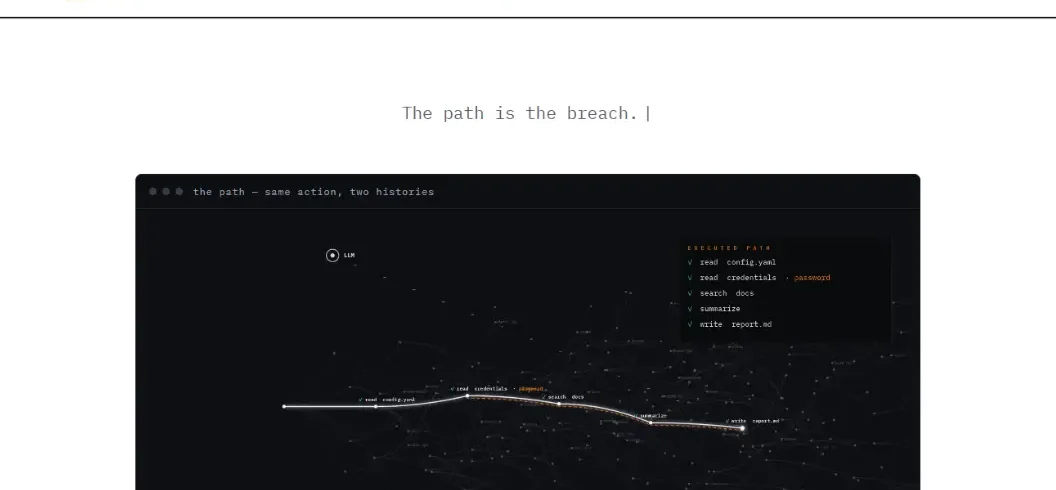
For example, an AI agent might have permission to read customer records and send emails. However, using both permissions together could expose private customer information. Kyvvu’s approach aims to identify potentially risky action sequences and apply appropriate security checks before those actions proceed.
The goal is to help organizations deploy AI agents with greater control without removing their ability to complete useful tasks.
Why Do AI Agents Need Better Security?
AI security risks have changed as systems have evolved from generating text to performing actions.
Maurits Kaptein, co-founder and CTO of Kyvvu and a full professor at Eindhoven University of Technology (TU/e), explains that earlier concerns centered on hallucinations that produced incorrect text. Today’s AI agents can interact with databases, execute operations, and change digital environments.
That creates a different category of risk.
An inaccurate chatbot response might mislead a user, but an AI agent with access to business systems could potentially delete records, send an inappropriate email, or expose confidential information.
Traditional security measures remain important, but they may not fully address the risks created when an AI system determines its next action dynamically at runtime.
How Does the Kyvvu Agent Security Kernel Work?
Kyvvu focuses on the agent harness: the software environment responsible for running an AI agent and managing its interaction with tools and systems.
Its approach evaluates actions as an agent attempts to perform them. Depending on the applicable security rules, an action can be allowed, flagged with a warning, or blocked before it executes.
The process can be understood through three main steps:
- Monitor agent actions: Observe the operations the agent attempts to perform through its execution environment.
- Evaluate security risks: Check whether an action or combination of actions conflicts with defined security rules.
- Apply the appropriate response: Allow permitted operations, warn about potentially risky behavior, or block actions that violate the rules.
This runtime approach adds another layer of protection alongside conventional measures such as identity management, access permissions, and code inspection.
Kyvvu emphasizes inspecting actions rather than examining the content of every interaction. This distinction defines its particular role in an AI security architecture.
7 Important Benefits of Kyvvu ASK for AI Security
1. Runtime Protection for AI Agents
AI agents can choose different paths while completing the same task. Their behavior may depend on context, tool results, and intermediate decisions.
Kyvvu’s runtime approach evaluates attempted actions as they occur. This can help organizations enforce security policies at the point where an agent is about to operate.
2. Reduced Risk of Sensitive Data Exposure
Giving an AI agent separate permissions to access customer records and send messages can create a potential data-leak pathway.
A runtime security layer can help identify risky combinations of actions and require additional checks, such as reviewing personally identifiable information (PII), before information is shared.
This is particularly relevant to organizations handling customer, employee, or financial data.
3. Protection Against Unwanted Actions
AI agents may perform operations with significant consequences, including modifying records or interacting with external systems.
By evaluating actions before execution, Kyvvu aims to help organizations prevent operations that violate their security requirements.
However, effective protection still depends on correctly configured policies, appropriate integrations, and the security controls surrounding the agent.
4. Support for Enterprise AI Deployment
Large organizations often develop AI agents across multiple departments and business processes. Managing permissions and risks becomes more complicated as the number of agents increases.
Kyvvu is designed to provide an additional security layer within these environments, helping businesses incorporate runtime controls into their broader AI architecture.
5. A Complement to Traditional Security
Conventional software security often focuses on identity, access control, code review, and restrictions established before a system runs.
AI agents introduce a challenge because their next actions can be determined dynamically during execution.
Kyvvu’s approach complements existing controls by evaluating actions at runtime. It is not a replacement for established cybersecurity practices, but an additional measure for managing agent-specific risks.
6. Integration With Enterprise AI Projects
Kyvvu works with integration partners, including IT consultants that help larger organizations build and deploy AI agents.
These partners can incorporate the security layer into a wider architecture rather than treating agent security as an isolated product decision.
This approach is useful for enterprises that need to coordinate AI development, governance, permissions, and operational security over multiple years.
7. A Focus on Controlled AI Autonomy
Businesses want AI agents to complete tasks independently, but unrestricted autonomy can introduce unacceptable risks.
Kyvvu’s approach aims to balance usefulness with control by evaluating the actions an agent attempts to take.
The broader principle is straightforward: organizations should be able to define what an AI agent may do, identify actions that require additional checks, and prevent operations that fall outside acceptable boundaries.
Kyvvu and the Growing AI Agent Security Market
Kyvvu entered the agent security space early, but the wider industry is increasingly focused on securing the environments in which AI agents operate.
The original report identifies several developments in this area, including OWASP’s Agent Control Standard, Microsoft’s Agent Control Specification, and NVIDIA’s Open Agent Safety Platform, which includes OpenShell, an open-source sandbox runtime for AI agents.
These initiatives reflect growing interest in controlling AI agent behavior through execution environments, policy enforcement, and sandboxing.
Although these approaches may address overlapping challenges, they should not automatically be treated as identical products. Their capabilities, implementation models, and intended uses can differ.
For Kyvvu, the growing attention to agent harnesses and runtime security reinforces the importance of the problem it is addressing. It also means organizations will have more approaches to evaluate when designing secure AI systems.
How Kyvvu Is Being Used by Enterprises
According to the original report, Kyvvu is running in production across regulated enterprises in the Netherlands.
These organizations are developing their own AI agents and need to understand how individual security controls fit into their broader technical architecture and long-term strategies.
Kyvvu primarily works through integration partners, including IT consultants that support enterprise AI development. Its technology serves as one layer in the wider security architecture.
This partner-led model allows organizations to consider runtime agent protection alongside their existing systems, governance requirements, and deployment plans.
The report does not provide detailed customer names, independently verified performance figures, or quantified reductions in security incidents. Therefore, the reported deployments demonstrate adoption, but they do not establish a specific level of risk reduction.
Kyvvu at TechEx Europe 2026
The original report states that Kyvvu is participating in TechEx Europe in Amsterdam on October 19–20, 2026, with Maurits Kaptein scheduled to speak.
The event provides an opportunity for enterprise teams to explore how agent security fits into a complete AI technology stack.
Topics of interest include runtime monitoring, action permissions, sandboxing, data protection, and the balance between AI autonomy and organizational control.
For businesses building their own agents, the key question is not simply whether an agent can complete a task. It is whether the organization can reliably control the actions the agent takes while completing it.
What Does Kyvvu ASK Mean for the Future of AI Security?
Kyvvu ASK highlights an important shift in enterprise AI security: organizations must consider not only the information an AI system generates but also the operations it performs.
As agents gain access to business applications, databases, and external tools, security measures need to account for the relationships between permissions and actions.
Runtime controls can help address this challenge by evaluating operations as they occur. Combined with identity management, least-privilege access, sandboxing, monitoring, and human approval for high-impact actions, they can contribute to a stronger security architecture.
However, no single security layer can eliminate every risk associated with AI agents. Organizations still need clear policies, testing, logging, incident response procedures, and ongoing oversight.
The long-term success of agentic AI will depend partly on whether businesses can make these systems both capable and controllable. Kyvvu’s focus on runtime action security represents one approach to that challenge.
Final Thoughts
Kyvvu ASK addresses a growing concern in enterprise AI: how to give AI agents the ability to act without allowing them to perform unintended or unauthorized operations.
By focusing on runtime action monitoring and policy enforcement, Kyvvu aims to help organizations add another layer of protection to their AI systems. As the agent security ecosystem develops, runtime controls, sandboxing, and traditional cybersecurity measures will all play important roles in building more dependable AI deployments.
Frequently Asked Questions
1. What is Kyvvu ASK?
Kyvvu ASK (Agent Security Kernel) is a security solution that monitors AI agent actions at runtime and can allow, warn about, or block operations based on defined security policies.
2. How does Kyvvu ASK protect AI agents?
Kyvvu ASK evaluates actions before execution to help identify risky behavior, prevent unauthorized operations, and reduce the risk of sensitive data exposure.
3. Can Kyvvu ASK replace traditional cybersecurity tools?
No. Kyvvu ASK is designed to complement existing security measures, such as identity management, access controls, code reviews, monitoring, and sandboxing.
4. Why is runtime security important for AI agents?
Runtime security helps organizations control AI agent actions while they execute tasks. It is particularly important when agents can access databases, modify records, send messages, or interact with external systems.

Leave A Comment